Wagyu — Information Design
and Data Visualization

Publication Designer
Healthy Food Awareness

Project Overview
Information design is concerned with making complex information easier to understand and use. It is a rapidly growing discipline that draws on typography, graphic design, applied linguistics, applied psychology, applied ergonomics, computing and other fields. It emerged as a response to people’s need to understand and use things like forms, legal documents, computer interfaces and technical information. Information designers responding to these needs have achieved major economic and social improvements in information use.

What is Wagyu?
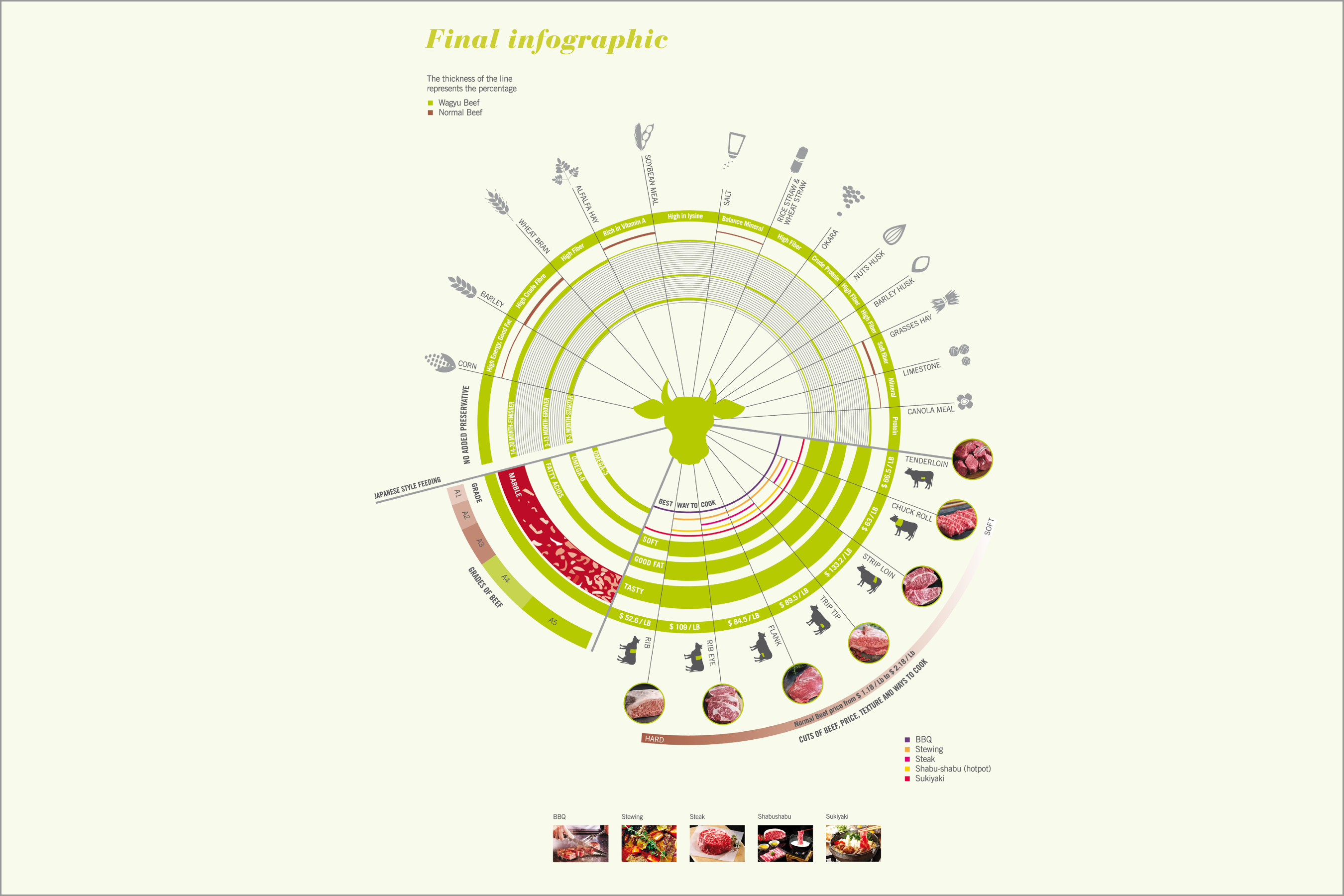
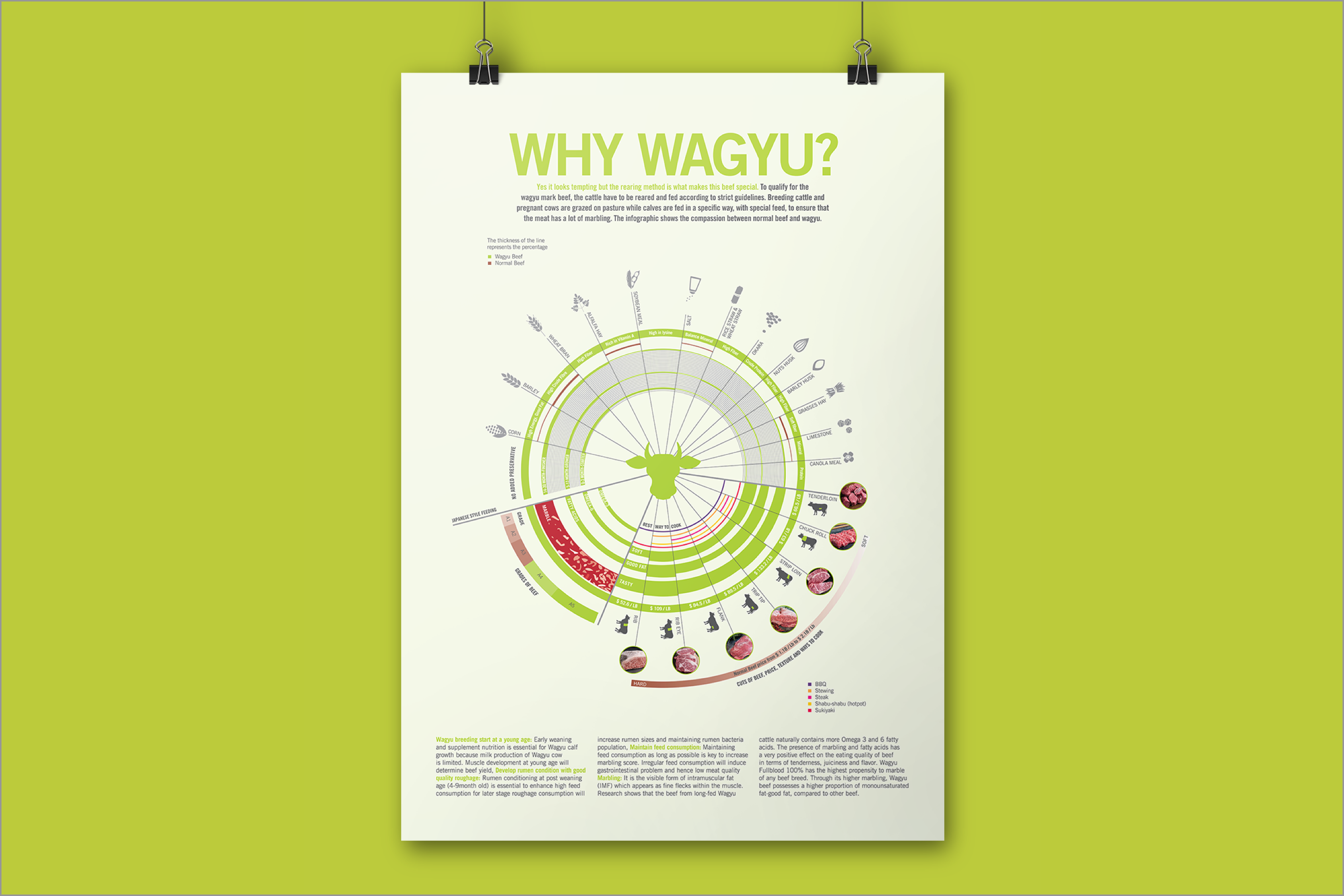
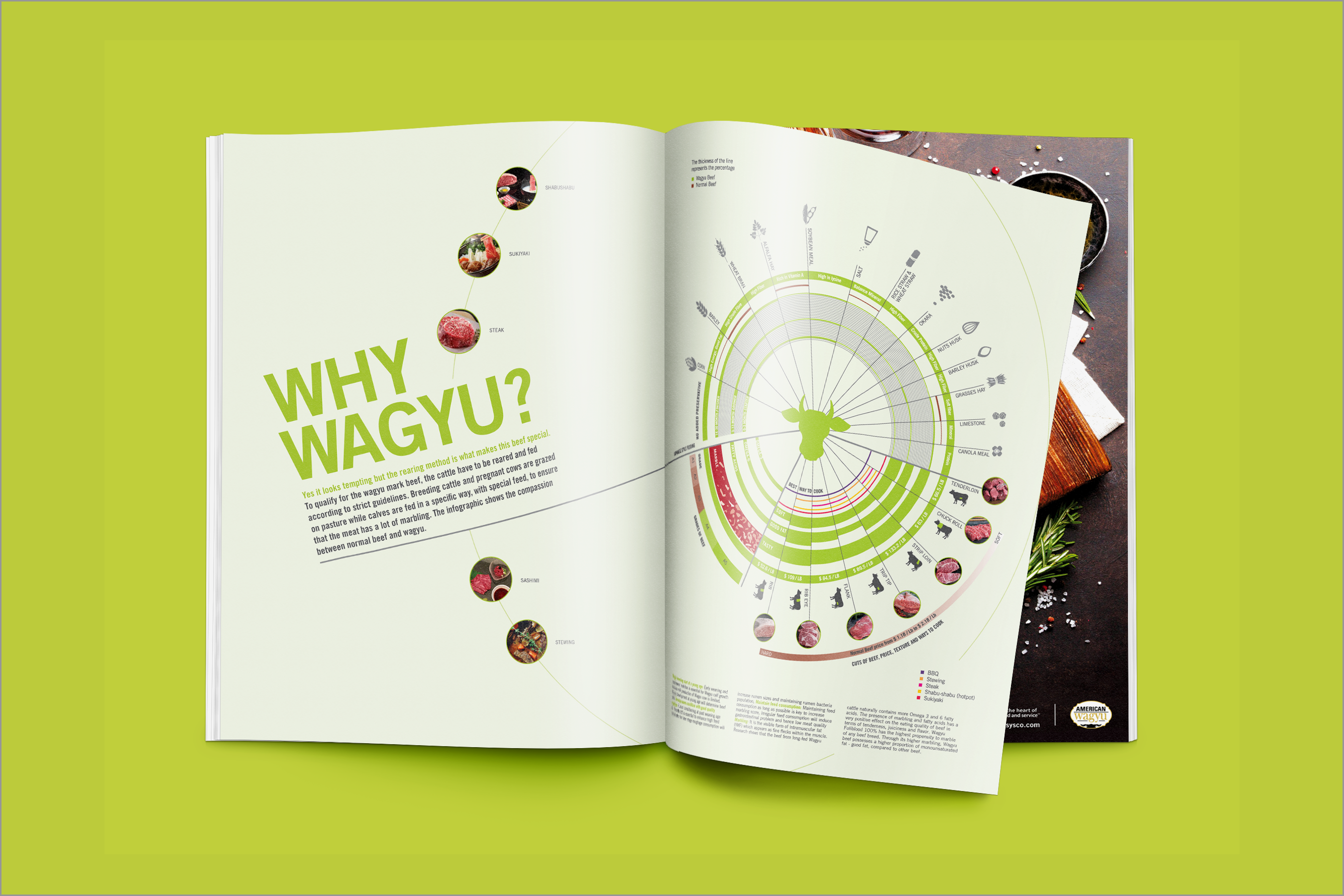
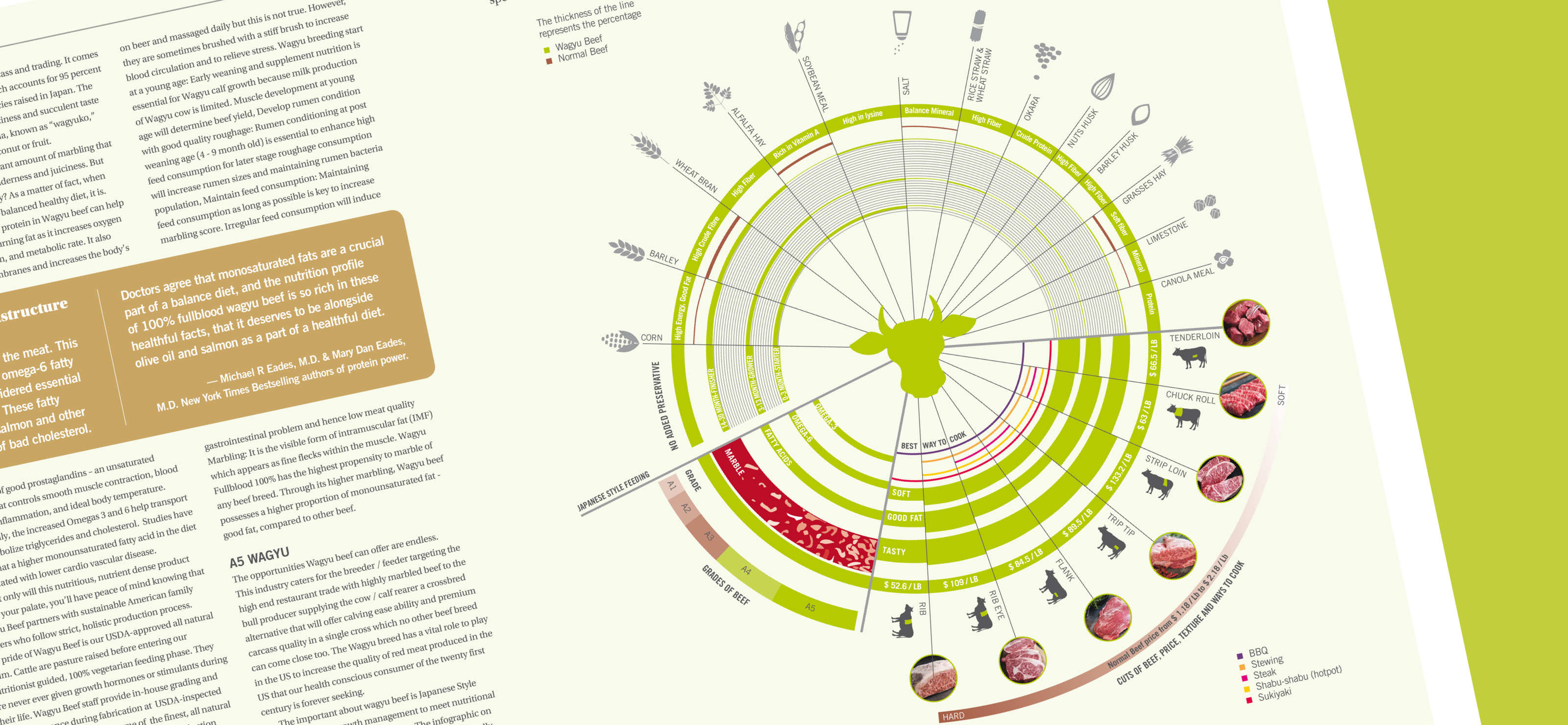
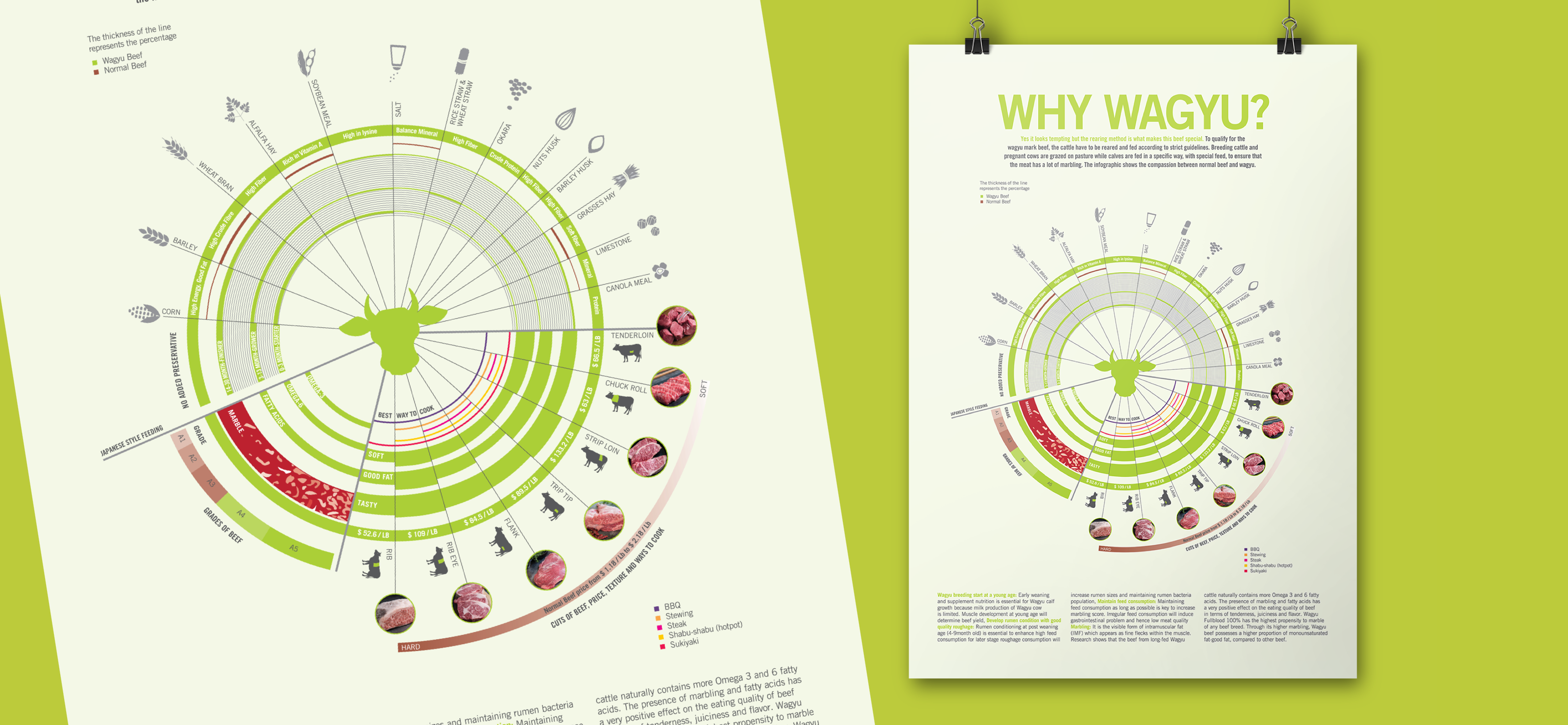
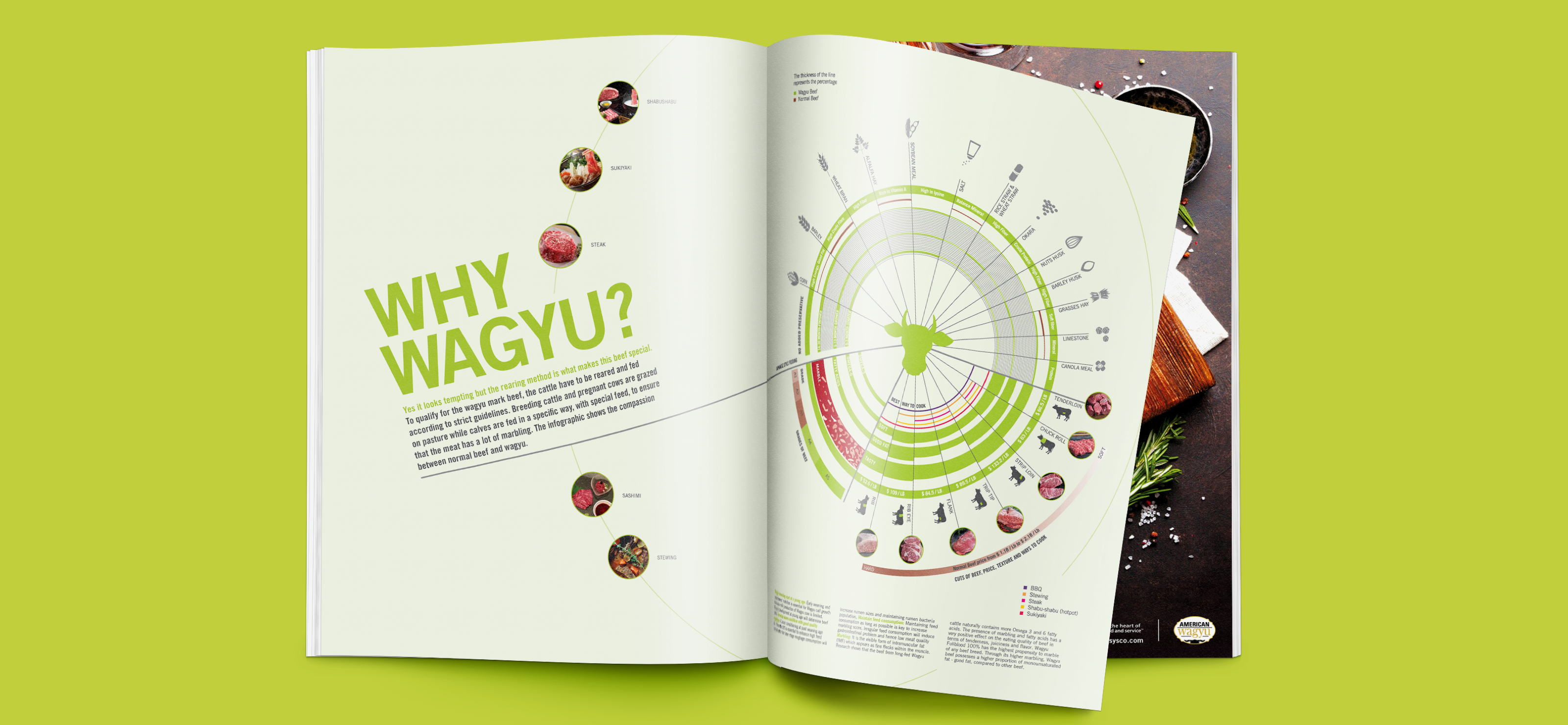
A Japanese beef cattle breed –derived from native Asian cattle. ‘WAGYU’ refers to all Japanese beef cattle. ‘Wa’ means Japanese and ‘gyu’ means cow. Wagyu is not only the most expensive beef in the world but it is full of rich nutrients and its marbling is considered very healthy. This simple infographic has been designed to explain what makes wagyu healthy yet expensive while also comparing it with normal beef.

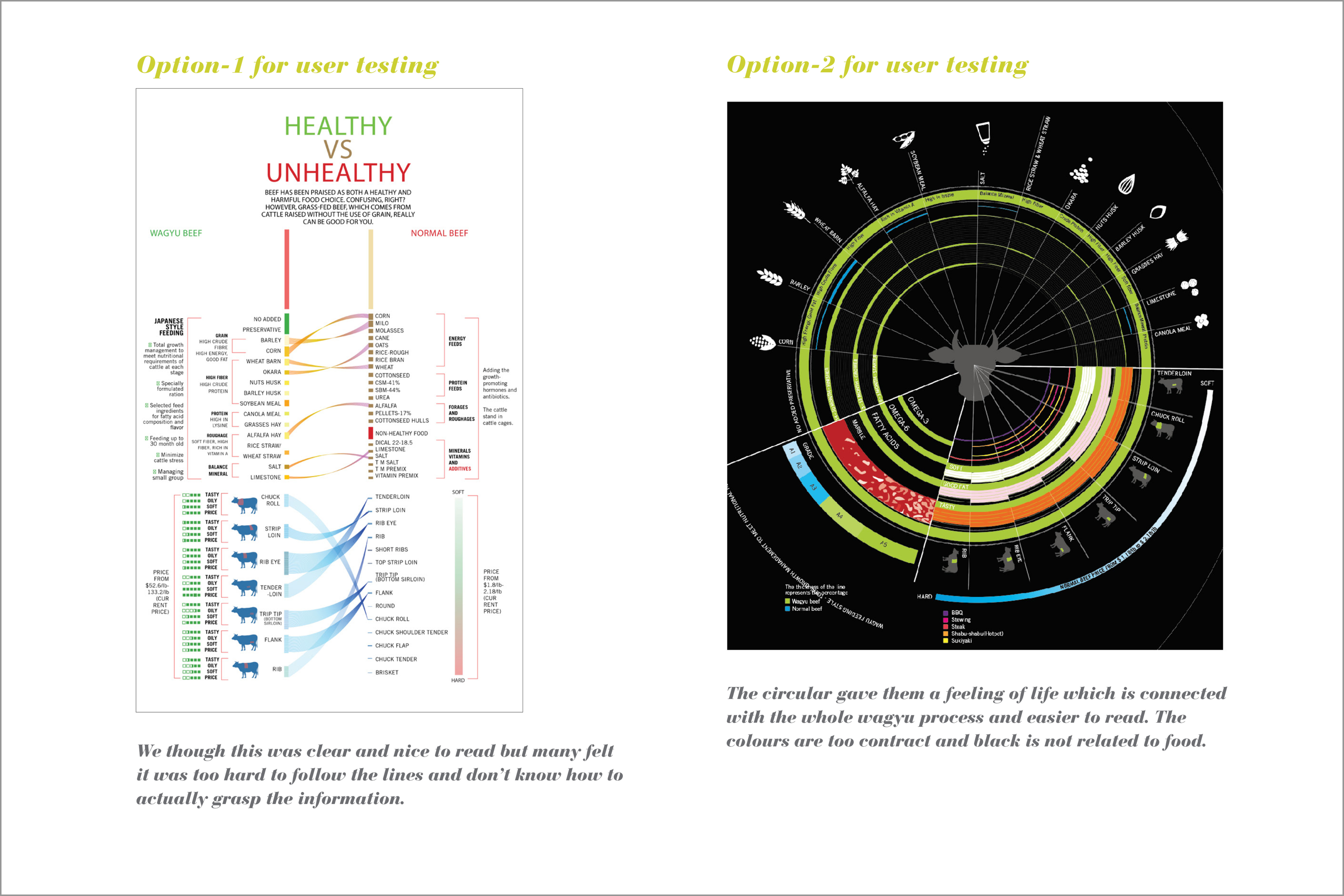
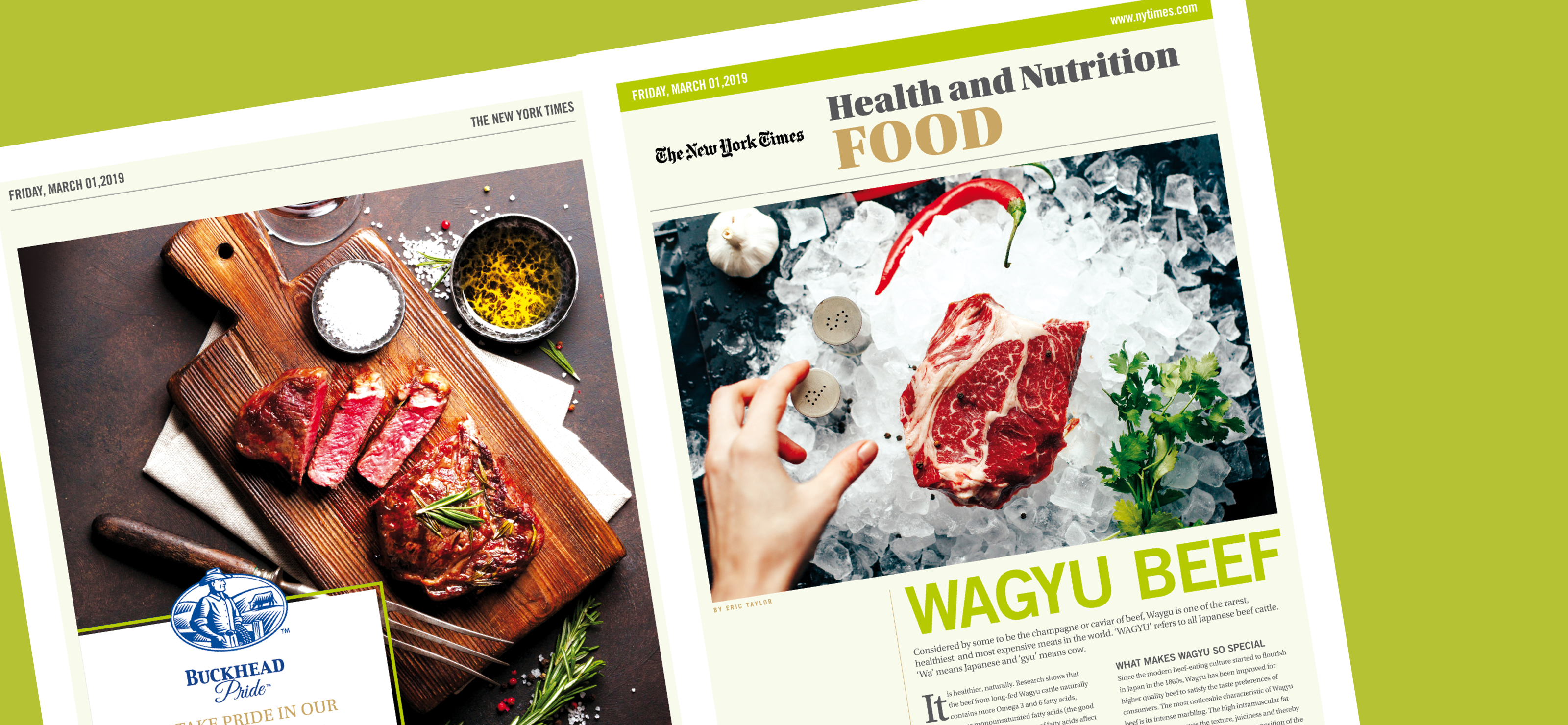
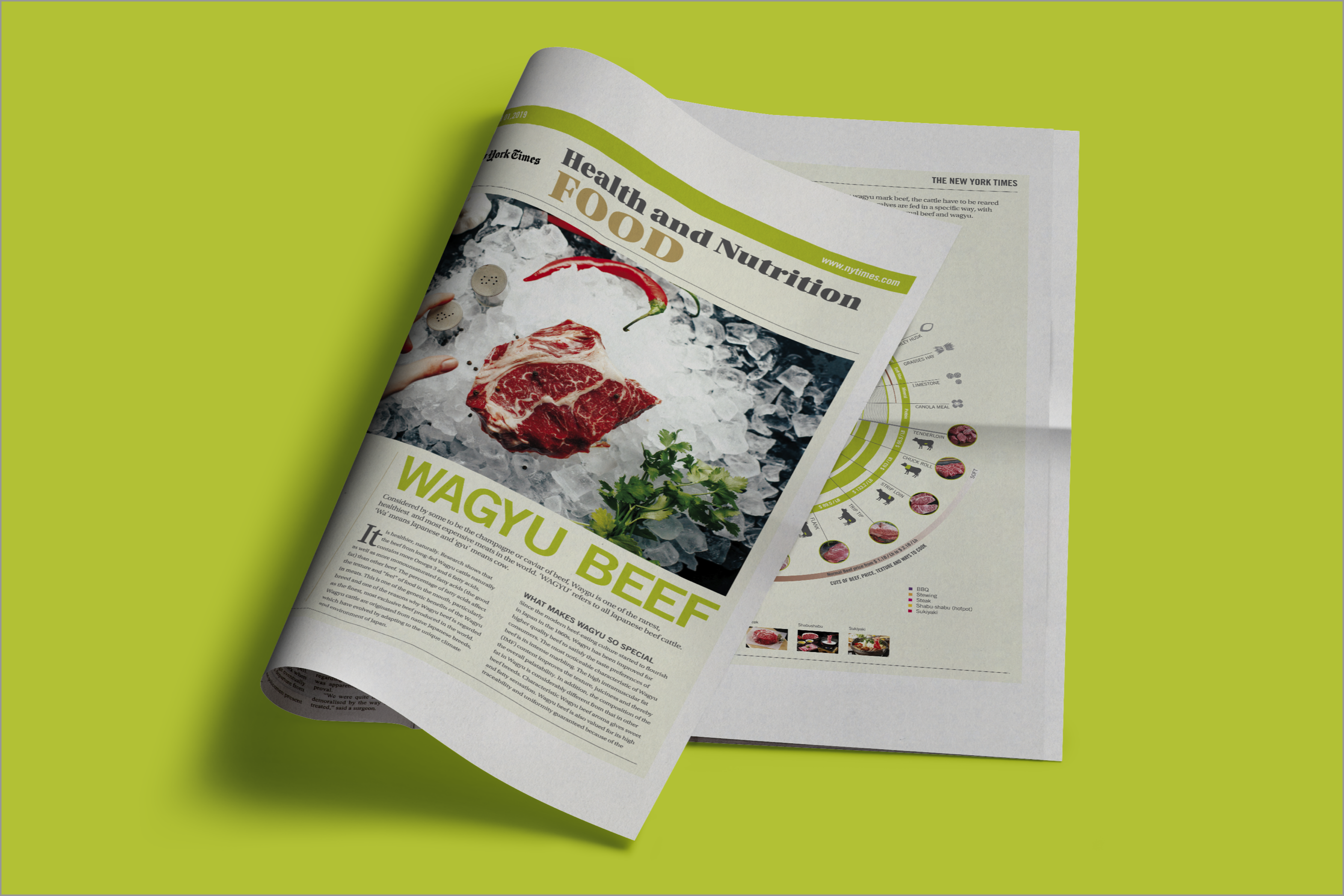
During research I observed that most people around me had limited information about wagyu. The idea behind designing this New York Times article and infographic was to create engaging content that could be consumed by a wider audience. By adopting the storytelling approach, I share the most interesting and important details about wagyu with an infographic as the backbone of my story.

Client and Audience
The client is “The New York Times,” an American newspaper based in New York City with worldwide influence and readership. The target audience for this article and infographic are food enthusiasts, beef lovers, chefs, healthy eaters and information seekers who appreciate simple and educational content.

Design goals/objectives
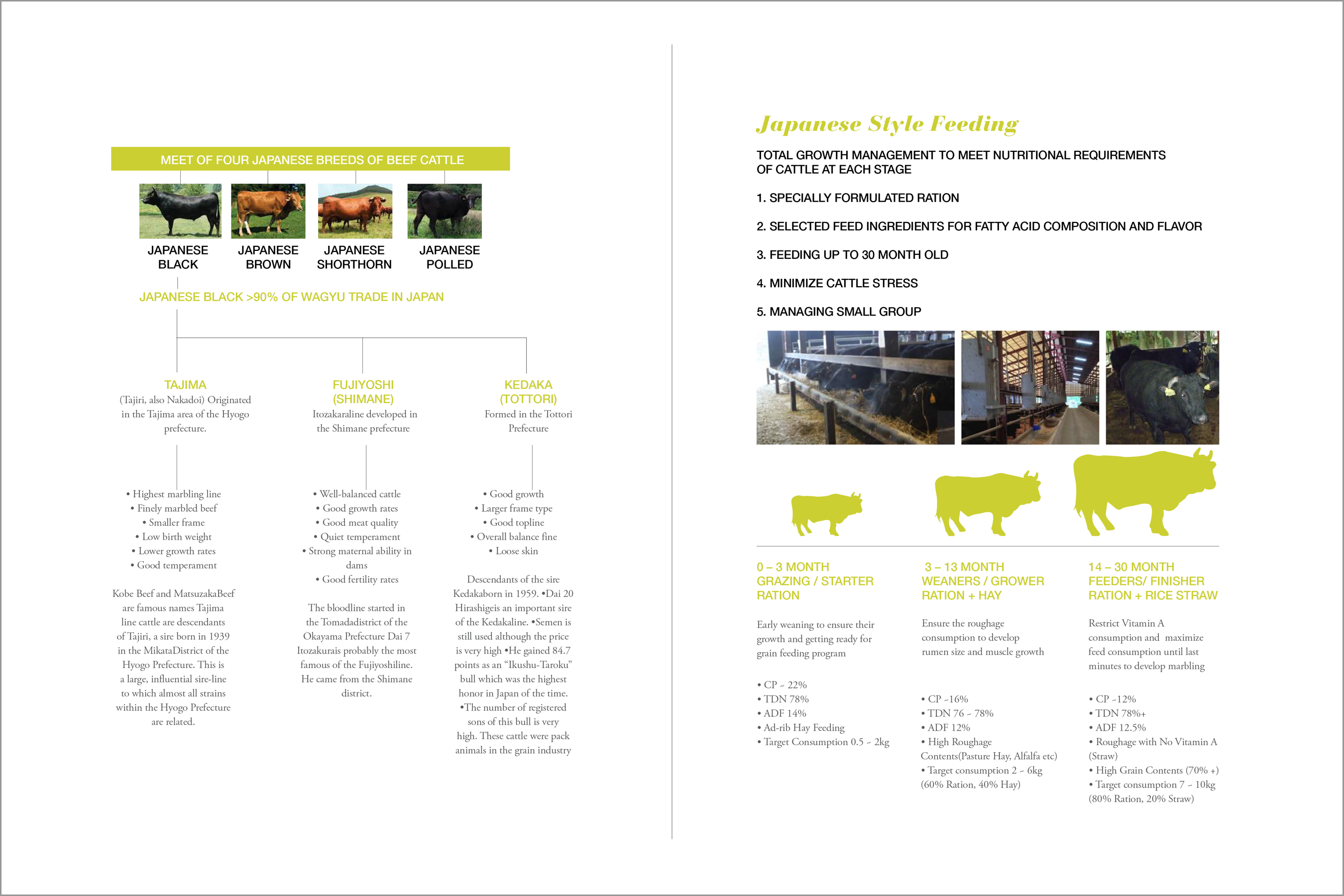
TThe goal was to highlight the most powerful statistics about wagyu, the breeding process for wagyu cattle and the nutrients they are fed between 0-30 months. The design also needed to highlight how this process ensures the beef is rendered healthy for consumption and the overall health benefits.

Design layout and development
The design layout and its development are inspired by the circle of life. The typefaces used are Trade Gothic LT Std for headline, Utopia Std for subhead, quotes and the body typeface. These typefaces aligned well with the subject matter with a mix of serif and sanserif. The color palette is green for wagyu beef, brown for normal beef and dark wheat, taking into consideration that the topic is related to life, food and nutrition.

Print production
4 colour Digital Tabloid printing on 55gsm improved paper.

Wagyu Process book

PAIN POINTS
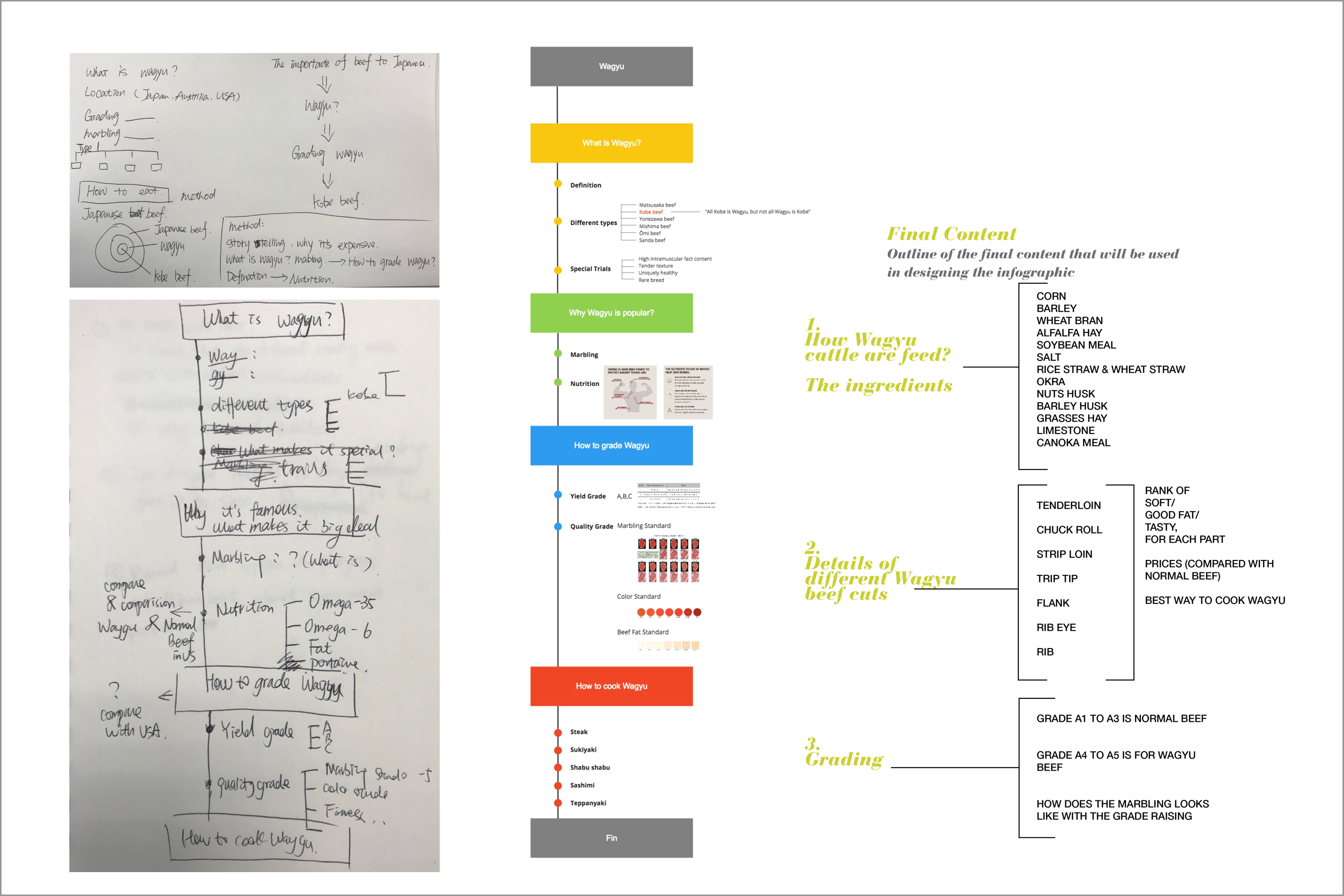
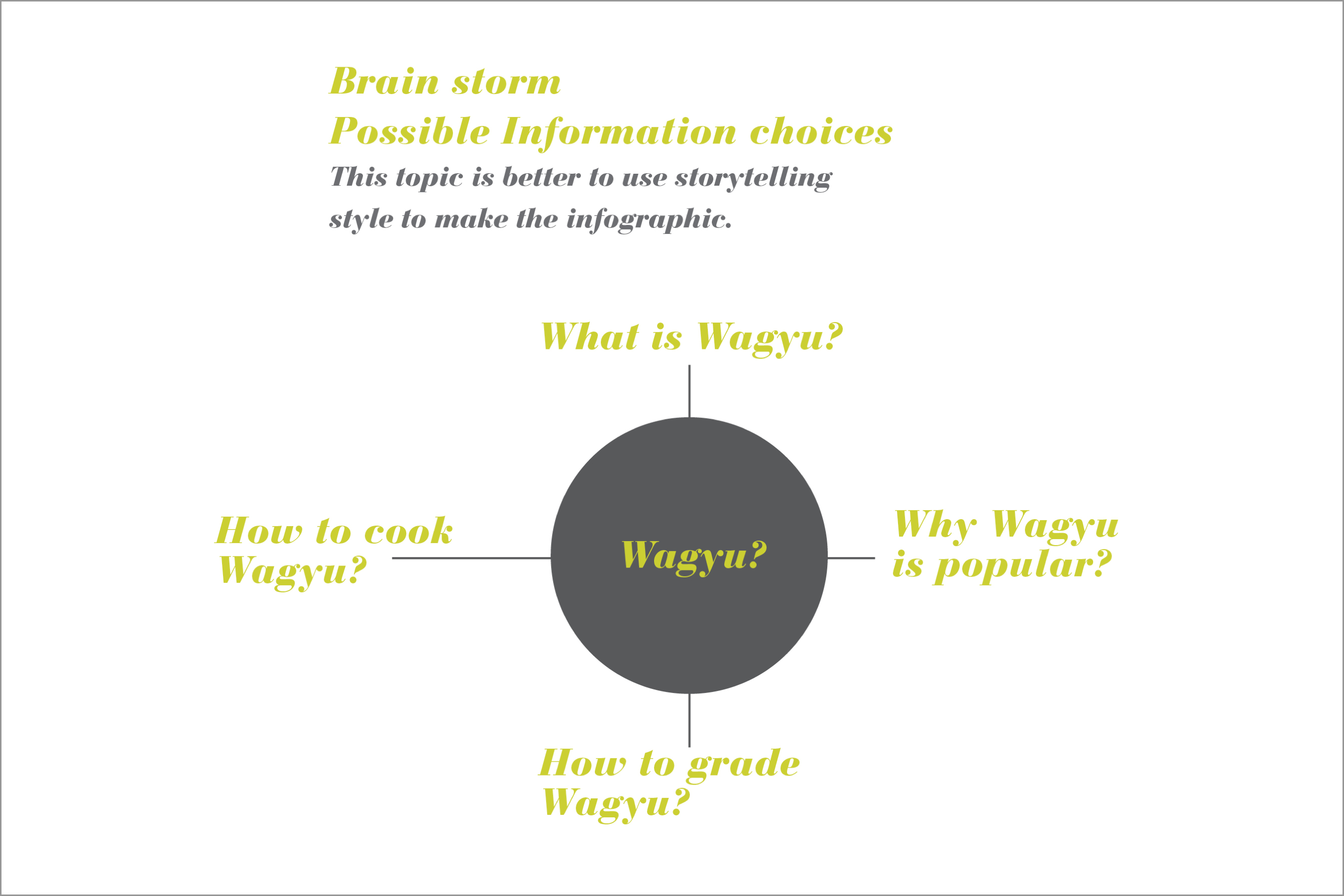
  • What is Wagyu?
  • Why Wagyu is popular?
  • How to grade Wagyu?
  • How to cook Wagyu?
  • GOALS
  • Wagyu
  • Difference between normal beef and Wagyu Beef.

  • Wagyu is Special
  • Give information about what makes wagyu so special.

  • Wagyu is different
  • Explain the Japanese style breeding method and its importance in making wagyu.

  • Wagyu qualities
  • The A1 to A5 Marbling in beef and why wagyu is A5 grading.

  • Wagyu information
  • Different cuts of beef and its texture, taste, price and ways to cook.
    Style-app-process

    Style-app-process

    Research

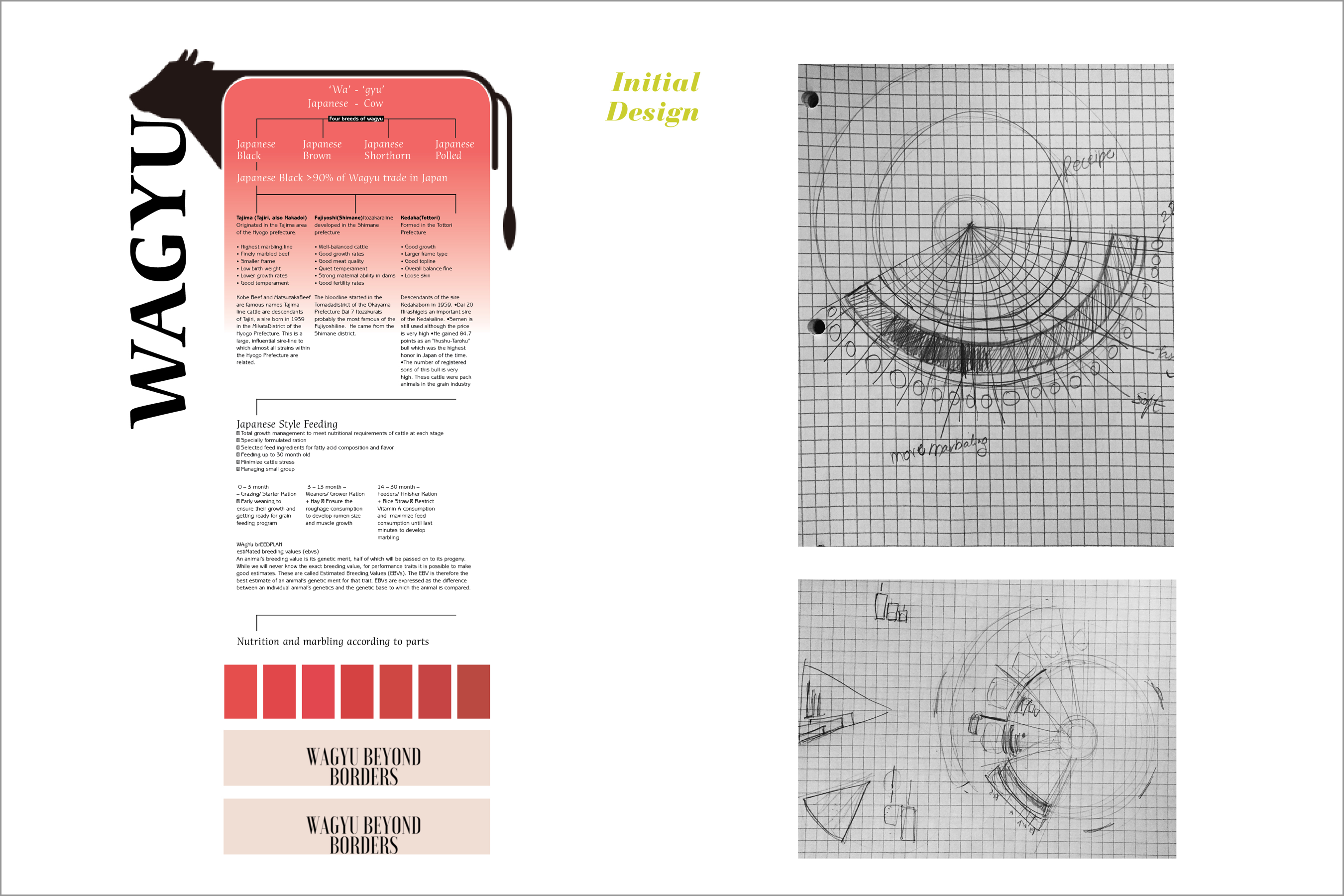
    Wagyu are cattle that are Asian. The term Wagyu can actually refer to several different types of cattle. In Japan, there are four types of Wagyu cattle. These main four strains are the Japanese Black, Japanese Brown, Japanese Polled and Japanese Shorthorn.

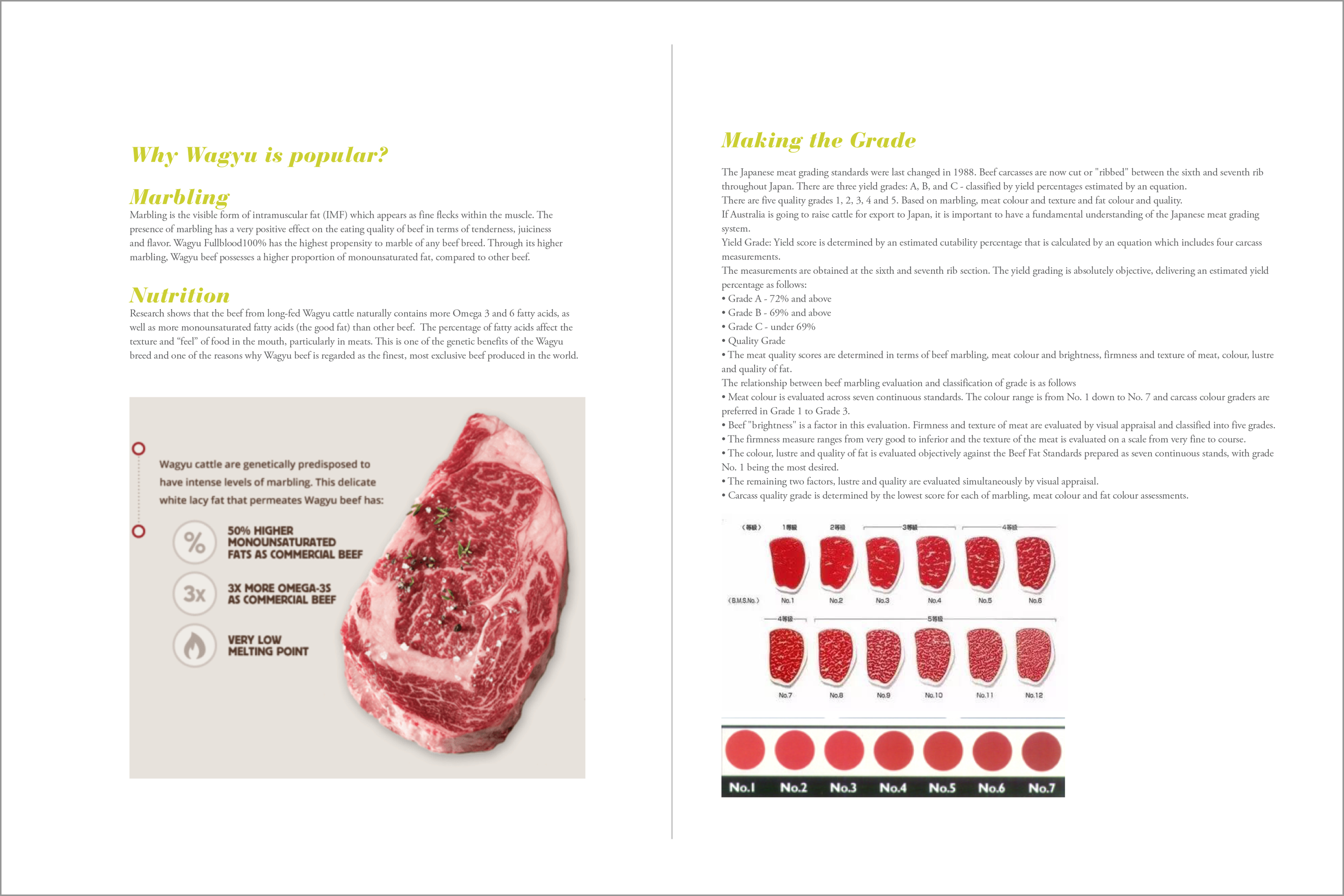
    Marbling is the visible form of intramuscular fat (IMF) which appears as fine flecks within the muscle. The presence of marbling has a very positive effect on the eating quality of beef in terms of tenderness, juiciness and flavor. Wagyu Fullblood100% has the highest propensity to marble of any beef breed. Through its higher marbling, Wagyu beef possesses a higher proportion of monounsaturated fat, compared to other beef. New research suggests that Wagyu beef can help maintain muscle while burning fat as it increases oxygen intake, energy production and increases the rate of metabolism.

    Read full Report
    Style-app-process

    Style-app-process

    Planning

    Designing and developing information involves the processes of information management — a cycle of acquisition, development, distribution, and review. Common topics in information management include design, development, delivery, quality assurance, translation, globalization, and localization.

    Read full Report
    Style-app-process

    Style-app-process

    Style-app-process

    Design

    Designing information visualizations offers endless possibilities when it comes to end products and it would be impossible to provide step-by-step instructions for all these possibilities. However, it is fair to say that while the end products may vary dramatically – the process by which I reach the best possible end product is consistently the same.

    Read full Report
    Style-app-process

    Style-app-process

    Style-app-process

    Extension

    New York times News paper

    Bon apatite Magazine

    Poster

    Wagyu Process book